Artem has extensive experience in digital marketing, having worked with travel startups, Web3 games, and tech products. He helps us attract the right audience by combining in-depth market research with the internal expertise of the Ostride Labs team.
Should your FinTech platform use Kubernetes? That decision just cost a Melbourne payments company $1.8 million. They cut halfway. Their team couldn’t handle it.
67% of companies delay Kubernetes deployments due to security problems.
(Source: CNCF 2024 Survey)
The Kubernetes pros and cons aren’t what vendors say. Kubernetes gives you powerful tools. But it wastes money if you get it wrong.
This guide tells you the truth. You’ll learn what works for FinTech platforms under AUSTRAC rules. What breaks. How to choose. Not what works for Netflix. What works for Australian FinTech teams.
2026 FinTech Reality
96% of companies use Kubernetes in production. (Source: CNCF 2024 Survey)
The question isn’t old versus new. It’s which setup matches your team and compliance needs.
Multi-cloud became standard. 65% of companies run Kubernetes in multiple clouds. (Source: CNCF) Kubernetes hides cloud differences. But running multiple Kubernetes clusters costs more than teams expect.
Cost pressure grew. Cloud spending for Australian FinTech jumped 34% in 2025. Revenue grew only 18%. This profit squeeze forces platforms to get value from infrastructure.
Bad Kubernetes clusters cost 2–3x more than old setups.
Kubernetes Pros
Pro 1: Container Setup at Scale
Kubernetes removes deployment problems. You say what you want. Kubernetes makes it happen.
Real case:
A Sydney lending platform cut deployment time. From 47 minutes to 4 minutes. Deploy frequency jumped. From 2x weekly to 8x daily. Zero unplanned downtime.
Self-healing works automatically. Restarts failed containers. Moves work from failed nodes. Keeps replica counts.
For AUSTRAC platforms running 24/7 transaction monitoring, this is required.
The catch:
Self-healing only works with correct health checks. 73% of Kubernetes production problems trace to wrong health checks. Your containers restart in loops. Or report healthy whilst broken.
Pro 2: Multi-Cloud Flexibility
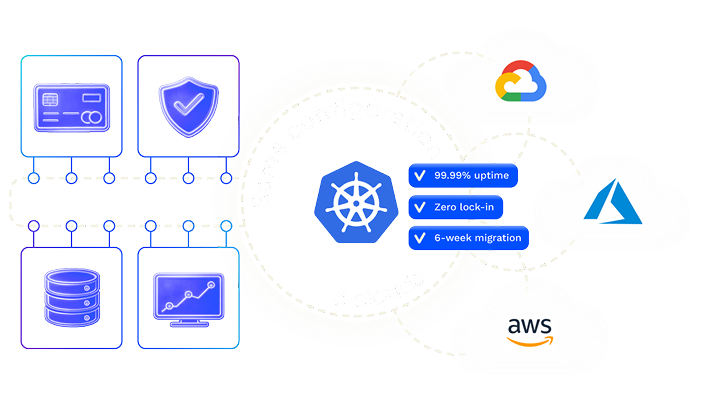
Kubernetes hides cloud differences. Same files work on AWS, Azure, GCP. For APRA business continuity rules, this flexibility is critical.
Real case:
An Australian crypto exchange runs identical Kubernetes clusters across AWS Sydney and Azure Melbourne. Active-active setup. Processes 140,000 transactions daily. Automatic failover tested quarterly.
Time to add third cloud: 6 weeks versus 9 months for old infrastructure.
The catch:
Multi-cloud works until you hit cloud-specific services. Managed databases differ. Load balancers differ. Storage types differ.
Real flexibility needs avoiding cloud-specific services. Or keeping parallel setups. This adds complexity.
Pro 3: Auto-Scaling
Auto-scaling enables dynamic capacity. FinTech workloads spike. Payment processing peaks month-end. Fraud detection surges after campaigns.
Before Kubernetes:
A Melbourne payments platform kept 60% average use. To handle peaks. Wasted A$420,000 yearly on idle capacity.
After Kubernetes:
Auto-scaling works on queue depth. Scales pods from 12 to 67. Adds nodes within 90 seconds. Average use rose to 78%. Annual spend cut by A$287,000. Peak response improved from 890ms to 340ms.
The catch:
Auto-scaling creates cost risk. Wrong setup spawns hundreds of pods during spikes. Bills exceed monthly budgets in hours. 31% of FinTech platforms disable auto-scaling after cost incidents.
Pro 4: Zero-Downtime Deployments
Kubernetes rolling updates deploy new versions gradually. Old pods stay active. New versions must pass health checks first.
Real case:
An Australian investment platform deploys updates 4–6x daily. During business hours. Zero customer downtime. Pre-Kubernetes: Twice monthly. Planned maintenance. 45-minute interruptions.
APRA benefit:
Kubernetes deployment history provides audit trail. Shows when each version deployed. Which nodes ran which versions. Automated rollback triggers. Meets compliance needs for change management docs.
The catch:
Zero-downtime assumes stateless apps. Financial transaction processing needs state coordination.
Database schema migrations create sequencing needs. Message queue consumers create sequencing needs. Distributed locks create sequencing needs.
43% of production incidents during FinTech deployments trace to state problems.
Pro 5: Cost Savings
Kubernetes bin-packing schedules work efficiently. Maximizes node use.
Financial impact:
A Sydney FinTech running 340 microservices cut infrastructure costs. From $89,000 monthly to $61,000 monthly. 31% reduction. Through better bin-packing alone. No app changes.
Vertical Pod Autoscaler suggests optimal resources. Cluster autoscaler adds right-sized nodes. Spot instances handle fault-tolerant work. 70% discount versus on-demand.
The catch:
Cost savings need discipline. Without automated cost monitoring, Kubernetes clusters cost 2–3x more than old infrastructure.
Kubernetes Cons
Con 1: Complexity You Can’t Remove
Kubernetes adds 47 component types. All need setup, monitoring, maintenance.
A capable engineer needs 6–9 months to get production skills. During this learning, production incidents are frequent.
Real cost—Australian lending platform first year:
3 major incidents (2–3 hours downtime each)
$147,000 on external consultants
40% of engineering time on Kubernetes work
2 senior engineers left
Total cost: $890,000 versus planned $320,000
The truth:
Kubernetes doesn’t reduce complexity. It trades infrastructure complexity for setup complexity.
If your team struggles with old pipelines, Kubernetes makes it worse.
Con 2: Security Problems
Kubernetes adds attack surfaces.
API server exposure. Wrong RBAC grants too many permissions. 83% of Kubernetes clusters in Australian FinTech have service accounts with too many permissions.
Container images. Base images contain security flaws. A single vulnerable image affects every pod.
Networking gaps. Default networking allows any pod to talk to any pod. 67% of FinTech Kubernetes deployments run without network policies.
Real incident:
Australian crypto platform suffered data theft. Attackers exploited vulnerable image. Moved through unrestricted networking. Accessed database credentials. Total impact: $2.1 million. Incident response. Fines. Customer compensation.
AUSTRAC needs: Digital Currency Exchange Register needs documented security controls. Getting AUSTRAC-ready Kubernetes security needs 6–8 weeks of security engineering.
Con 3: Cost Blowout Risk
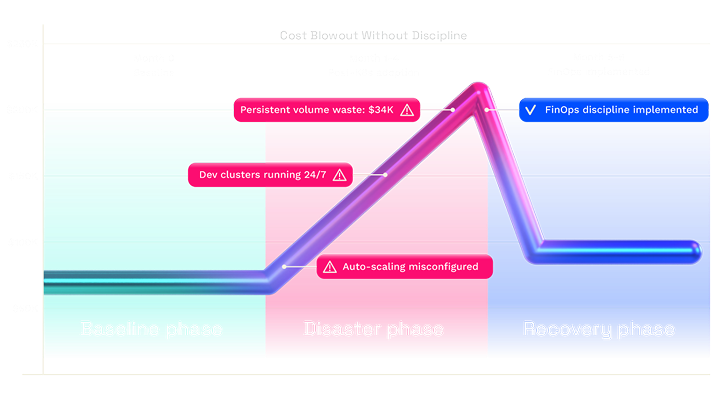
Without FinOps discipline, Kubernetes clusters cost 2–3x old infrastructure.
Common traps:
Over-set resources. Developers set safe limits. Actual use averages 40% of requested resources.
Cluster sprawl. Each team deploys their own cluster. A Melbourne FinTech found 17 separate Kubernetes clusters after 18 months.
Storage waste. Unused storage stays allocated. A payments platform found $34,000 annual spend on abandoned storage.
Real disaster:
Australian investment platform monthly AWS bill jumped. From $67,000 to $214,000. 220% increase. Within 4 months of Kubernetes adoption. Root cause: Wrong auto-scaling setup. Dev clusters at production scale 24/7. No resource caps. Storage buildup.
6 months unexpected spend: $890,000.
Con 4: Monitoring Gaps
Old monitoring tools don’t understand Kubernetes. You need cluster metrics. App metrics. Container metrics. Network metrics.
Building full monitoring needs linking Prometheus, Grafana, Jaeger/Tempo, log collection.
Full monitoring setup: 8–12 weeks for FinTech platforms with compliance docs.
Without monitoring: A Sydney lending platform had random API timeouts. Affected 12% of loan applications. Investigation took 3 weeks.
Root cause: CPU limits caused throttling. But metrics weren’t exposed.
Revenue impact: $340,000 from abandoned applications.
Con 5: Compliance Work
AUSTRAC, APRA CPS 234, Privacy Act create extra Kubernetes setup.
Audit trail. AUSTRAC expects docs. Who deployed what. When. Why. Kubernetes audit logs must be captured. Kept 7 years. Made searchable.
Data location. The Privacy Act requires customer data stay in Australia. Kubernetes doesn’t enforce this natively. Needs node labels. Admission webhooks.
Secrets. Storing credentials in Kubernetes Secrets provides minimal security. APRA requires encryption at rest. Rotation policies. Access auditing. Needs Vault or KMS integration.
Network separation. AUSTRAC expects isolation between payment processing, customer data and reporting. Needs Network Policies.
Real timeline: Setting up AUSTRAC-ready Kubernetes security for Melbourne payments platform needed 14 weeks. Ongoing $23,000 monthly for scanning, compliance monitoring, audit prep.
Decision Framework
Answer honestly. If more than 3 answers are “No”, risk is high.
Team Skills:
Docker/container experience (6+ months)?
Run CI/CD pipelines successfully?
Manage infrastructure-as-code?
Have on-call rotation?
Comfortable with declarative config?
Business Needs:
Deploy multiple times weekly?
Need multi-cloud deployment?
Having capacity challenges?
Compliance needs repeatable deployments?
Infrastructure cost reduction strategic?
Technical Readiness:
Apps containerizable?
Have automated testing?
Codebase structured for microservices?
Can tolerate 6–9 month learning?
Business Support:
Leadership understands complexity?
Budget for training, tools, consulting?
Can dedicate engineering time?
Patience for productivity drop?
Results:
YES to 14–18: Go ahead. Start migration.
YES to 10–13: Possible. Use managed (EKS, AKS, GKE). Train team.
YES to 6–9: High risk. Fix skills first. Try alternatives: serverless, PaaS.
YES to 0–5: Will fail. Focus on basics. Try again in 12–18 months.
Frequently Asked Questions
What are the main Kubernetes pros and cons for FinTech?
Kubernetes pros: Container setup at scale. Multi-cloud flexibility. Auto-scaling. Zero-downtime deployments. Cost savings when set up right. Australian FinTech platforms get 5–10x deployment frequency increases. 20–35% infrastructure cost reductions. 99.9%+ uptime. Meet AUSTRAC requirements.
Kubernetes cons: Complexity needing 6–9 months training. Security problems. Cost blowout risk (clusters cost 2–3x old infrastructure without FinOps). Monitoring gaps. Compliance work needing 6–8 weeks security engineering for AUSTRAC platforms.
Is Kubernetes worth it for Australian FinTech?
Kubernetes delivers value for FinTech platforms with mature DevOps. Real deployment speed needs. Platforms get 28% cost cuts. 67x deployment frequency increases.
However, 67% of companies delay Kubernetes deployments due to security issues. Success depends on team discipline more than technical capability.
For platforms without skills, focus on basics first. Containerisation. CI/CD maturity. Infrastructure-as-code.
How long does Kubernetes setup take?
Full production-ready Kubernetes setup for AUSTRAC FinTech: 40 weeks (9–10 months). Timeline: Foundation (8 weeks training and tools). Pilot migration (8 weeks first service). Progressive migration (16 weeks stateless and stateful). Tuning (8 weeks cost reduction and security). Budget: Team training $40,000–60,000. External consulting $80,000–150,000. Tooling $60,000–100,000. Total first-year: $180,000–310,000.
What AUSTRAC compliance affects Kubernetes?
AUSTRAC Digital Currency Exchange providers must show: Repeatable environments with GitOps workflows. Audit trail of infrastructure changes. Every deployment is traced to Git commit. Approved individual. Documented timestamp. Transaction monitoring for real-time AML/CTF. Low-latency data pipelines. Kubernetes StatefulSets running Kafka. Processing 450,000+ transactions daily. Incident response with documented security. Kubernetes provides pod security policies. Admission controllers. Runtime security scanning. But needs setup and maintenance. Data location ensuring Australian customer data stays in Australian regions. Through node labels. Admission webhooks. Network policies preventing offshore flows.
Can Kubernetes reduce costs?
Yes—when set up right with FinOps discipline. Australian FinTech platforms get 20–35% cost reductions.
However, without automated cost monitoring, Kubernetes clusters cost 2–3x more than old infrastructure. Common traps: Over-set resources (40% average use). Cluster sprawl. Storage waste. Auto-scaling without limits creating unbounded cost.
Cost reduction requires: Kubecost/OpenCost setup. Namespace resource caps. Automated cluster scaling with hard limits. Regular reviews. Dev/staging auto-shutdown outside business hours.
What security risks does Kubernetes add?
Kubernetes adds attack surfaces: API server with wrong RBAC. 83% of audited clusters have too many permissions. Container images with security flaws. Single vulnerable image affects every pod. Network gaps. Default networking allows any pod to talk to any pod. 67% run without network policies. Secrets exposure with poorly-secured credentials. AUSTRAC-ready security requires: CIS Kubernetes Benchmark. Network policies for every namespace. Secrets encryption at rest. Admission controllers. Automated vulnerability scanning. Regular penetration testing. Setup: 6–8 weeks security engineering.
Conclusion
Kubernetes isn’t optional for FinTech platforms in 2026. 96% of companies use Kubernetes. It now holds 92% market share in container orchestration.
Successful platforms share common traits: honest team assessment before adoption, significant investment in training, progressive migration starting with low-risk services, and strong FinOps discipline to prevent cost overruns.
Failed migrations follow predictable patterns: adopting Kubernetes because competitors do, underestimating complexity, ignoring cost management until bills escalate, and containerising applications that are not suited for orchestration.
Your success depends more on team discipline than technical capability.
The platform provides powerful tools. Auto-scaling. Self-healing. Multi-cloud flexibility. But those tools need constant attention. Monitoring. Tuning. Security hardening. Cost management.
Teams lacking discipline find Kubernetes makes weaknesses worse.
For FinTech platforms with mature DevOps, clear compliance needs, real deployment speed needs: Kubernetes delivers. 5–10x deployment frequency increases. 20–35% cost cuts. 99.9%+ uptime. Meet AUSTRAC audit requirements.
For platforms without skills: Kubernetes will be expensive and fail. Focus on basics first. Containerisation. CI/CD maturity. Infrastructure-as-code.
Kubernetes will be here in 18 months when your team is ready.
The competitive advantage comes not from Kubernetes adoption but from team excellence enabling successful adoption. That distinction matters badly.
Discuss Your Kubernetes Strategy
Thinking about Kubernetes for your FinTech platform? Not sure your team has the skills?
We’ve guided 40+ Australian FinTech platforms through Kubernetes evaluation, migration, tuning. Our approach starts with honest team assessment. Not vendor promises.
We’ll tell you if Kubernetes is too early for your current capabilities.
We’ll check your application setup. Evaluate team readiness. Give clear advice: proceed, prepare first, or pursue alternatives. No sales pitch. Just engineering reality.
Ostride Labs. We build products with full compliance confidence.
Rating:
Share
Our newsletter (you’ll love it):
Let's talk!
Book a free 30-minute scaling assessment with our experts.
Enter your data below to instantly download the checklist.
Cloud Security DevOps Engineer
Full time
Requirements
5+ of experience working with public or private cloud components, administration, and support
3+ years and expert-level skills working in a SRE role involving at least two of these cloud providers: GCP, MS Azure or AWS
Experience setting up, adjusting, and administering monitoring tools, including alarm configurations and log level analysis
Ability to learn applications functionally and technically, and work on troubleshooting with minimal input from the application team
Experience automating routine procedures
Experience and the ability to elaborate on success stories of increasing fault-tolerance of multi-datacenter infrastructure
Excellent Linux/Unix administration skills and deep understanding of Linux OS principles
Knowledge of bash, network protocols, and implementation principles for major cloud providers
Excellent theoretical knowledge of the OpenShift Container platform and its low level features and limitations
Site Reliability Engineer
Full time
Requirements
5+ of experience working with public or private cloud components, administration, and support
3+ years and expert-level skills working in a SRE role involving at least two of these cloud providers: GCP, MS Azure or AWS
Experience setting up, adjusting, and administering monitoring tools, including alarm configurations and log level analysis
Ability to learn applications functionally and technically, and work on troubleshooting with minimal input from the application team
Experience automating routine procedures
Experience and the ability to elaborate on success stories of increasing fault-tolerance of multi-datacenter infrastructure
Excellent Linux/Unix administration skills and deep understanding of Linux OS principles
Knowledge of bash, network protocols, and implementation principles for major cloud providers
Excellent theoretical knowledge of the OpenShift Container platform and its low level features and limitations
We use cookies to ensure that we give you the best experience on our website. If you continue to use this site we will assume that you are happy with it.